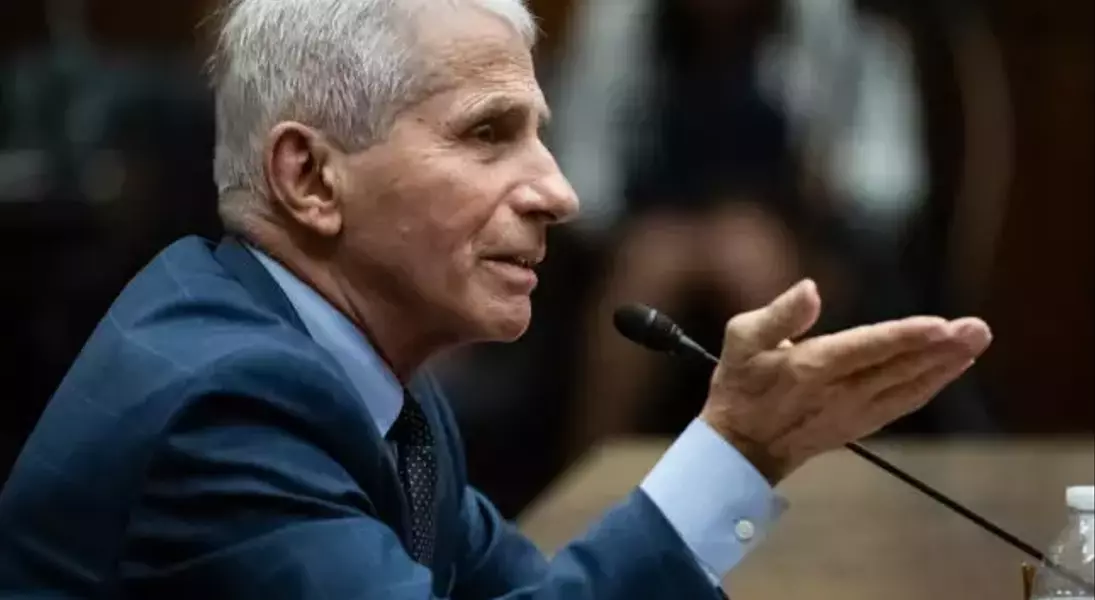
In a significant Senate committee session, Dr. Anthony Fauci, former chief medical advisor to the President, chose to exercise his Fifth Amendment rights, declining to address inquiries concerning the global health crisis and its genesis. He cited legal counsel as the basis for this decision, framing the session as a partisan effort by Senator Rand Paul to unfairly target and incriminate him, thereby undermining legitimate congressional oversight. Fauci expressed his distress at having to resort to such measures, emphasizing his long-standing record of cooperation with legislative bodies.
The proceedings quickly highlighted the deep divisions surrounding the pandemic response and accountability. Senator Paul, who has been a vocal critic, accused Fauci of obfuscating facts related to the virus's origins, particularly his belief in a lab leak theory, and of providing false testimony to Congress. Despite these serious allegations, Fauci consistently reiterated his Fifth Amendment invocation. The debate extended to the political motivations behind the hearing, with Democratic Senator Gary Peters questioning the impartiality of the inquiry, suggesting it was designed to support pre-determined conclusions rather than foster genuine bipartisan oversight or enhance public safety.
This event underscores the ongoing contentious debate surrounding the handling of the pandemic and the search for its origins. It brings to the forefront the complex interplay between public health, scientific integrity, and political accountability, illustrating how crucial national health discussions can become entangled in partisan disputes. The incident serves as a poignant reminder of the challenges inherent in navigating public crises under intense scrutiny and the importance of fostering an environment where facts can be pursued without political prejudice.
In the pursuit of truth and public trust, it is imperative for all parties involved in critical national dialogues to prioritize transparency and accountability. Such principles are fundamental to a functioning democracy, ensuring that public servants can perform their duties without undue political pressure, and that the public receives accurate, unbiased information. By upholding these values, society can move towards a more just and informed future.